


Q3 is one of the busiest shipping periods of the year. With mid-year sales, monthly platform promotions, and the early build-up toward the year-end festive rush, businesses and home sellers alike find themselves packing more parcels than usual. Getting your packaging right during this stretch is not just about presentation — it directly affects whether your items arrive safely, whether your customers come back, and whether you end up paying for replacements out of pocket.
The good news is that packing smarter does not require a complete overhaul of how you work. It mostly comes down to choosing the right materials and tapes for the job.
Why Q3 Puts Pressure on Your Packaging
Online retail in Singapore is no longer a niche channel, and the numbers from the Singapore Department of Statistics make that clear. According to SingStat’s Retail Sales Index, online retail sales accounted for around 13% of total retail sales in July 2025, rising to 15.5% when motor vehicles are excluded — up from 12.0% the same month the year before. That steady, year-on-year growth means more parcels moving through the system every single month, with more handling at sorting facilities and more pressure on every seal and carton.
Q3 also brings heat and humidity, which can work against adhesives that are not designed to cope with those conditions. If you have ever pulled a roll of tape off a box only to find it barely stuck, you will know exactly what that means in practice.
Choosing the Right Tape for the Job
Not all tapes are equal, and using the wrong one is one of the most common packaging mistakes that increases shipping costs. Here is a straightforward breakdown of what works for what:
- OPP tape is the go-to for most standard carton sealing. It stands for oriented polypropylene, and it is the clear or brown tape you typically see on boxes heading through courier networks. It is strong, moisture-resistant, and cost-effective for high-volume packing. For Q3 conditions, look for a version with a higher adhesive coating weight — the thickness of the adhesive layer — as it will hold up better in warm, humid warehouses and on delivery vehicles.
- Masking tape has its uses in packaging, particularly for labelling or temporarily securing folds during packing, but it is not built for the rigours of transit. Avoid relying on it as a primary seal.
- Reinforced filament tape is worth considering for heavier boxes or anything that needs extra tensile strength along the edges. The fibreglass strands running through it make it significantly harder to tear, which matters when you are sealing cartons weighing several kilograms.
- Cloth offers good conformability, meaning it sticks well to uneven or textured surfaces. These are useful when you are sealing irregular-shaped packages or boxes with slight warps in the cardboard.
The Case for Good Carton Selection
The tape is only as good as what it seals. Using underweight cartons is a false economy, especially when boxes may sit in warm storage before dispatch or be stacked under additional weight. A good rule of thumb is to match your carton’s burst strength to the weight of the contents plus any stacking load it is likely to encounter. Most courier-grade cartons will carry a rating on the side panel — pay attention to it.
For items that shift inside the box, void fill is just as important as the outer seal.
Crumpled kraft paper, air pillows, and foam inserts all serve different purposes. Kraft paper is a sustainable, cost-effective option for light, fragile items, while foam inserts offer better protection for electronics or glassware. Packaging materials selected thoughtfully at the outset will reduce the time and cost of claims and resends further down the line.
When You Are Shipping in Volume
For businesses sending dozens or hundreds of parcels a week, consistency matters just as much as quality. Having a standardised packing setup — defined box sizes, a go-to tape, and a clear void-fill system — reduces errors, speeds up the packing process, and keeps your spend predictable.
A few practical tips for volume shippers:
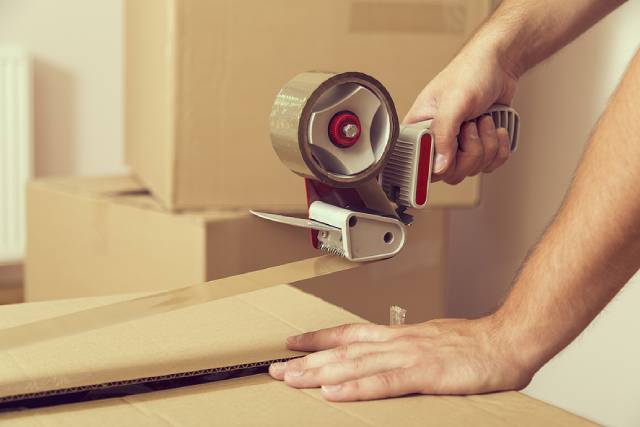
- Pre-cut your tape lengths or invest in a tape dispenser, as this reduces handling time per parcel significantly.
- Store tape away from direct sunlight and heat, as prolonged exposure degrades the adhesive. A cool, shaded storage area will extend shelf life considerably.
- Check your carton stock regularly. Boxes stored in humid conditions may have absorbed moisture, weakening the corrugated fluting and reducing the carton’s structural integrity even before it is sealed.
- Use a minimum of three strips of tape on every seal — one down the centre and one along each edge join — for anything going through a standard courier network.
Pack It Right From the Start
Q3 is not the time to cut corners on packaging. The volume is higher, the conditions are tougher, and customer expectations have not gone down. Taking a few minutes to review your tapes and materials before the busy period hits will pay dividends in fewer damaged parcels, fewer complaints, and less waste overall.
For quality tapes, carton-sealing solutions, and packaging materials built to meet the demands of commercial shipping, MOPI is well worth getting in touch with. With over 40 years of experience supplying adhesive and packaging products across Singapore, our team can help you find what works best for your operation.