


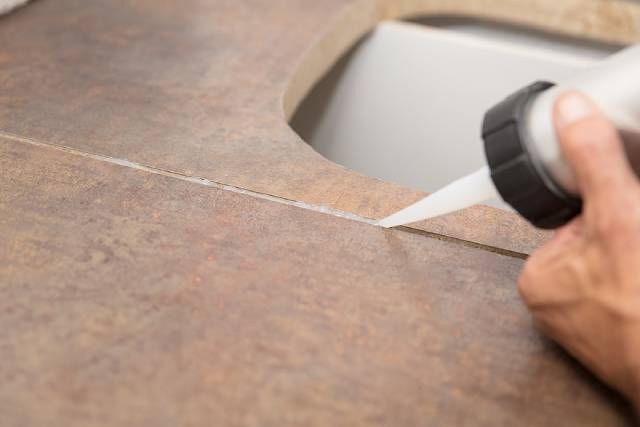
Laminate and countertop installations look straightforward on the surface. You apply adhesive, press the laminate down, and the job is done. However, what is often overlooked is that the adhesive doing that work is under constant stress from heat, moisture, daily use, and the natural movement of the substrate beneath it. Choosing the wrong product rarely reveals itself on day one. Instead, problems usually appear months later as lifting edges, bubbling surfaces, or a countertop that has started to separate from its base.
Why laminate adhesive requires careful consideration
Not every adhesive bonds laminate reliably, and the reason lies in the nature of the material itself. High-pressure laminate (HPL) is dense and non-porous with a low-energy surface, which means many standard adhesives struggle to achieve the mechanical bond required for a lasting installation. Furthermore, kitchen countertop undergo thermal cycling daily. You need a product that can handle both the initial bonding challenge and ongoing stress without losing grip.
Contact adhesive is the most widely used product type for this work. It is applied to both surfaces, allowed to become touch-dry, then the two surfaces are joined under pressure. The bond forms on contact, resulting in an immediate, strong hold across the entire bonded area. For large flat surfaces like countertops, this full-coverage approach significantly outperforms spot or bead application in both strength and long-term stability.
Solvent-based vs water-based contact adhesives
Solvent-based contact adhesives have historically been the gold standard for professional laminate installation. They offer strong initial tack, fast dry times, and reliable performance across a wide range of temperatures and humidity levels. The trade-off is their content of volatile organic compounds (VOCs), which makes adequate ventilation essential during application. In enclosed spaces like fitted kitchens or bathrooms, this is a practical constraint that affects how and when the work can be done.
Water-based contact adhesives have improved significantly over the past decade and are now a viable alternative for many applications. They are lower in VOCs, less flammable, and easier to clean up. However, dry times are generally longer, and performance in high-humidity environments can vary between products, so it’s important to check the technical datasheet before committing.
For professional installations where fast turnaround and consistent performance across varying site conditions are priorities, solvent-based contact adhesive remains the more dependable choice. For residential or DIY work in well-ventilated spaces where a longer working time is acceptable, water-based alternatives are worth considering.
Applying contact adhesive correctly
Bond quality depends heavily on application technique, and this is where many installations go wrong. A few principles apply regardless of product:
- Apply an even, consistent coat to both surfaces. Uneven coverage leads to weak spots in the finished bond.
- Allow the adhesive to become touch-dry. Joining surfaces too early or too late reduces bond strength.
- Use a roller or firm pressure. Apply pressure across the full surface once the two pieces are joined to ensure no air pockets remain. These are the primary culprits behind future lifting.
- Work in sections on large countertops. Use dowels or rods to hold the laminate above the substrate while positioning, then remove them progressively as you press the laminate into place.
Temperature and humidity affect “open time”, the window between the adhesive becoming touch-dry and losing its ability to bond effectively. In hot or dry conditions, open time shortens. In cool or humid conditions, it extends. Understanding the open time of your specific product before you begin helps prevent bond failure caused simply by poor timing.
When epoxy or polyurethane adhesives are a better fit
Contact adhesive is the standard choice for flat laminate sheets, but countertop work sometimes involves joining sections, bonding edge profiles, or securing undermount sinks. These applications often require a different type of adhesive.
Two-part epoxy adhesives offer exceptionally high bond strength and excellent chemical resistance, making them suitable for joins exposed to water, cleaning products, or mechanical stress. They require accurate mixing and have a defined working time once mixed, but the resulting bond is rigid and durable. For stone composite or solid surface countertops, epoxy is frequently the specified adhesive for seam joining.
Polyurethane adhesives sit between contact adhesive and epoxy, offering excellent strength with more flexibility. This makes them useful where some movement between bonded components is expected, such as where a countertop meets a wall or cabinet with a different coefficient of thermal expansion. For projects that extend beyond laminate, understanding how to pick the right adhesive for each substrate type helps avoid the cost of a mismatched bond later on.
What to check before you buy
Before selecting an adhesive for any laminate or countertop job, confirm the following:
- Substrate compatibility: HPL, MDF, plywood and solid timber all have different surface characteristics. Check that the adhesive is rated for your specific substrate combination.
- Temperature and moisture resistance: Kitchen and bathroom countertops need an adhesive that handles heat, steam and regular cleaning without degrading.
- Open time: Match the open time to your working speed and the size of the installation. Larger jobs need longer open times.
- VOC content: If the installation is in an enclosed or poorly ventilated space, low-VOC or water-based formulations reduce health and fire risk during application.
The right adhesive for the job
A laminate or countertop installation is only as good as the adhesive holding it together. Taking time to match the product to the substrate, environment and application method avoids the far more disruptive work of dealing with a bond that fails after the job is complete.
MOPI stocks a range of contact adhesives and bonding products suited to laminate, countertop and joinery applications. Whether you are outfitting a single kitchen or managing adhesive supply across multiple fit-out projects, our team can help you identify the right product for your specific requirements. Contact us today to discuss your project and confirm the correct specification before work begins.